
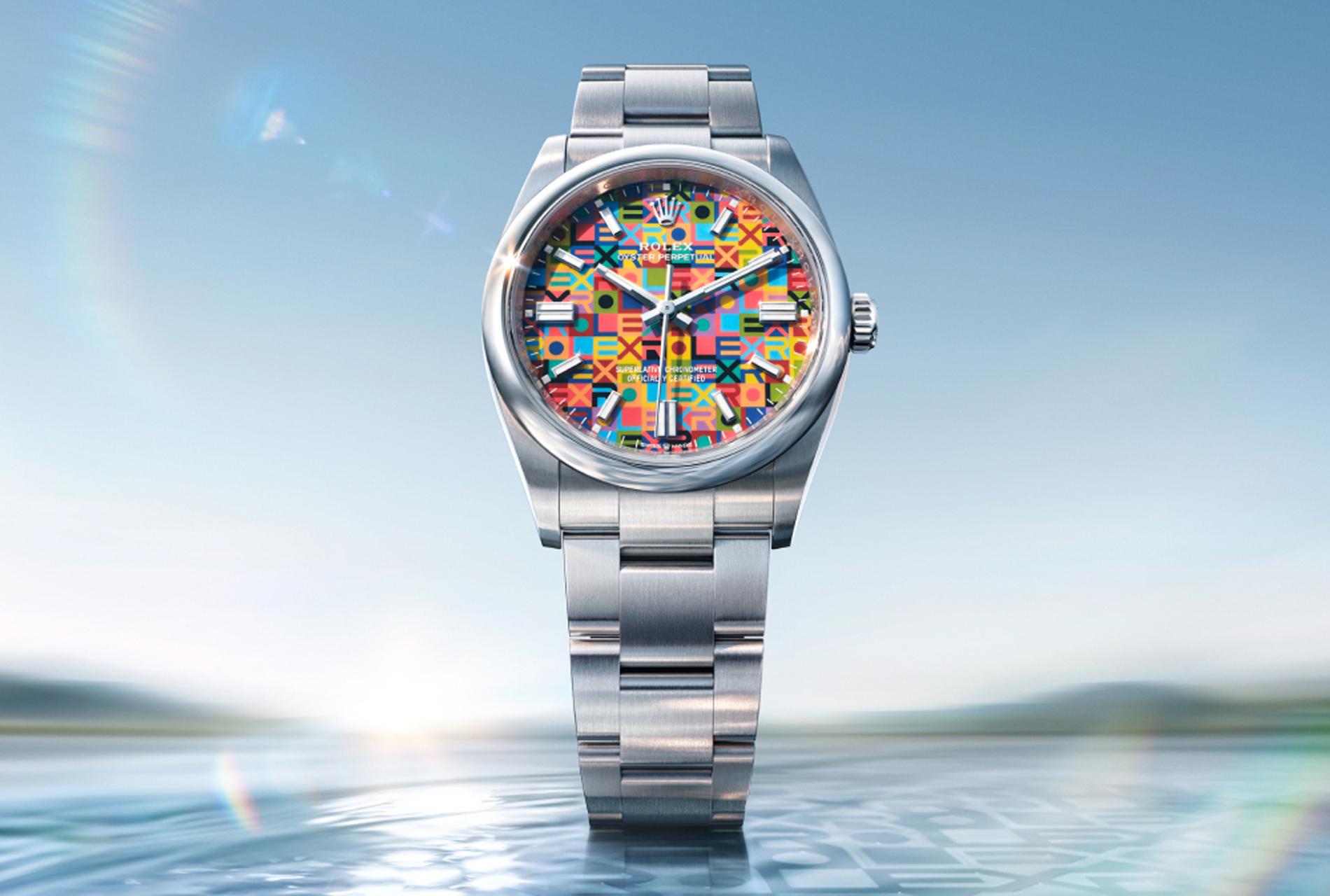
Rolex celebrates Oyster’s 100th anniversary

From a technical perspective, three mechanical breakthroughs were required to create a commercial, front-loader washing machine:
A flexible rubber door seal gasket capable of maintaining a watertight barrier even as the drum spins.
A reinforced glass door allowing visibility while withstanding pressure and temperature changes.
And precision drum alignment and bearings to ensure smooth rotation without compromising the seal.
No single manufacturer claims complete credit for these milestones, but Miele and AEG arguably did most to move the world from top-loader washing machines to the more efficient and space-saving front-loaders that began to take over in the middle of the 20th century.
If Rolex was in the laundry business, it would not have allowed such a significant mechanical advancement to have passed without claiming maximum credit.
Developing robust, reliable and waterproof wristwatches required decades of incremental improvements.
Among them was the first hermetically sealed screw cases for pocket watches, developed by François Borgel in the late 19th century, which used threaded case backs and bezels
Charles Depollier in the 1910s created the Depollier Waterproof wristwatch, with cases sealed by gaskets, that kept time in the trenches of World War I.
But the 1926 launch of the Rolex Oyster is remembered as one of the most important technical breakthroughs in the history of modern watchmaking, not least because of Hans Wilsdorf’s prowess in sales and marketing, so that it is now celebrated as the world’s first commercially successful waterproof wristwatch.
Its innovation lay in a hermetically sealed case, achieved through a combination of screw-down bezel, caseback and winding crown (the key invention), protecting the movement from dust, moisture and pressure.
At a time when wristwatches were still widely considered fragile compared to pocket watches, this was a decisive leap forward in durability and practicality.
And Wilsdorf understood that technical innovation alone would not be enough.
In one of the earliest examples of modern watch marketing, Rolex staged a public demonstration to prove and publicise the Oyster’s capabilities.
In 1927, British swimmer Mercedes Gleitze wore a Rolex Oyster during her attempt to swim the English Channel.

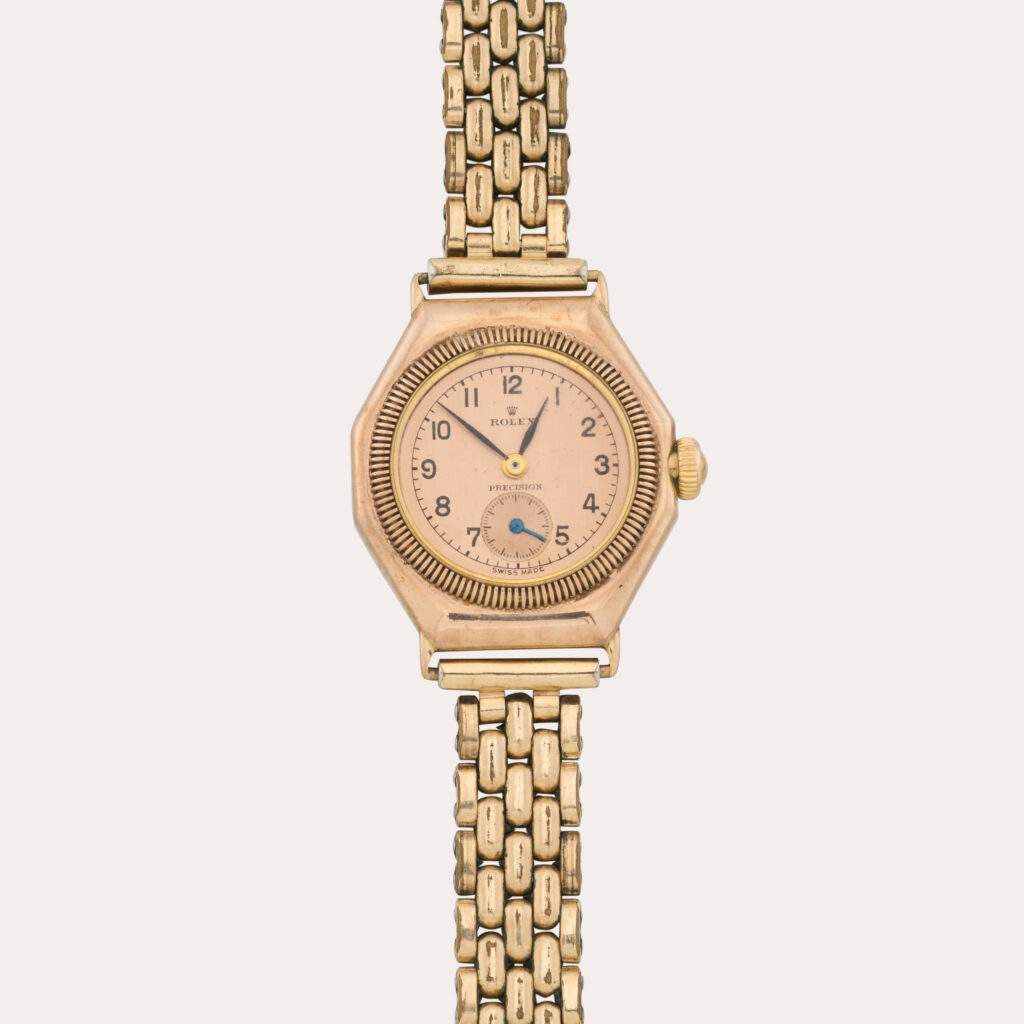
Although she did not complete the crossing on her first attempt, the watch remained fully functional after more than 10 hours in cold seawater.
Rolex capitalised on the moment with a full-page advertisement in the Daily Mail, showcasing the watch’s performance.
The campaign is widely regarded as one of the first instances of experiential marketing in the luxury goods sector: using real-world testing to validate product claims and build consumer trust.
The Oyster case architecture became the template for Rolex’s future designs and remains central to the brand’s portfolio today.
A century on, every Rolex watch comes in a descendent of the Oyster case, which has evolved in design and technical sophistication for the Submariner, Sea-Dweller, Daytona, Explorer and GMT Master II.
Its closest ancestor is the Oyster Perpetual, which is the headline act to mark 100 years since the case construction was born.
Rolex has reissued its entry level steel timepiece with its bezel, hands, lume-filled hour markers and a special crown with a 100th anniversary logo made from Rolesor gold.
Its slate sunray dial has a subtle 100 YEARS etched just below the 6 o’clock hour marker.
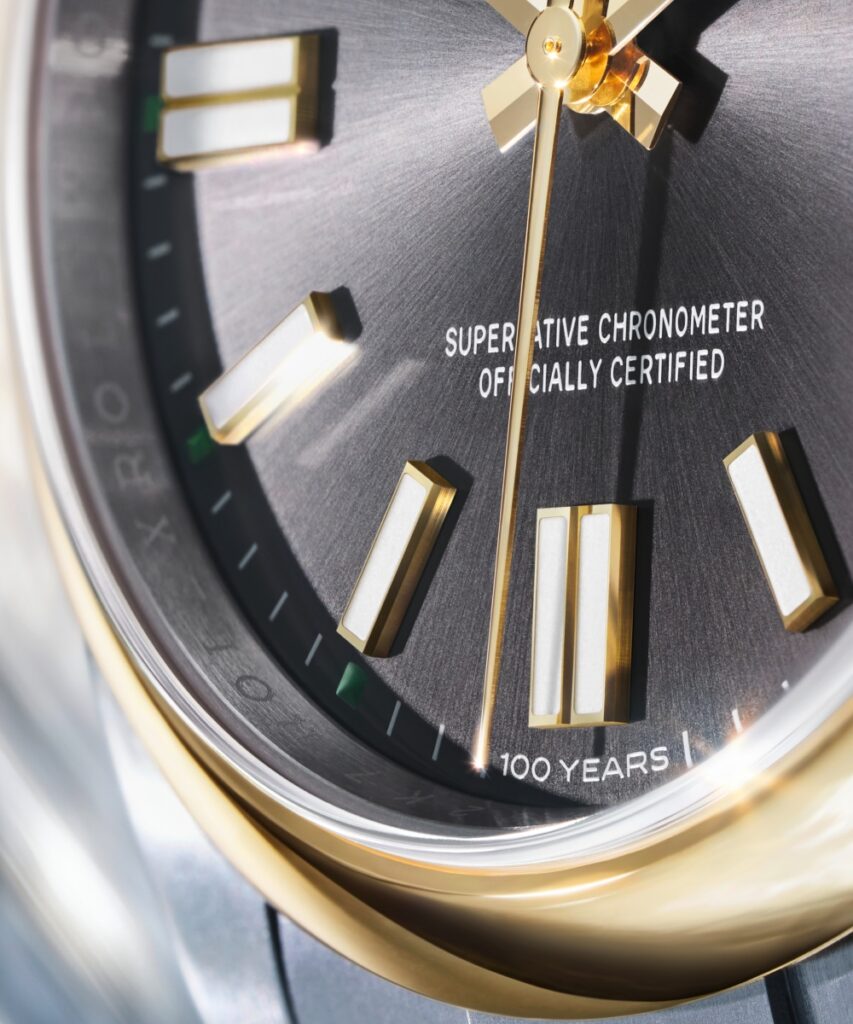
The 41mm watch houses a Calibre 3230 automatic movement, concealed behind a closed case back, which has passed a new set of Superlative Chronometer tests that confirm accuracy of +/- 2 seconds in daily use.
It arrives with a price tag of £8,050, a hefty premium over the steel-only model’s £5,900.
While Rolex obsessives will delight in details like the anniversary crown, casual observers’ eyes will be drawn to a model with a dramatic “Jubilee” dial, a modern interpretation of a design introduced in the late 1970s where the letters of ROLEX are depicted in jumbled-up coloured blocks.
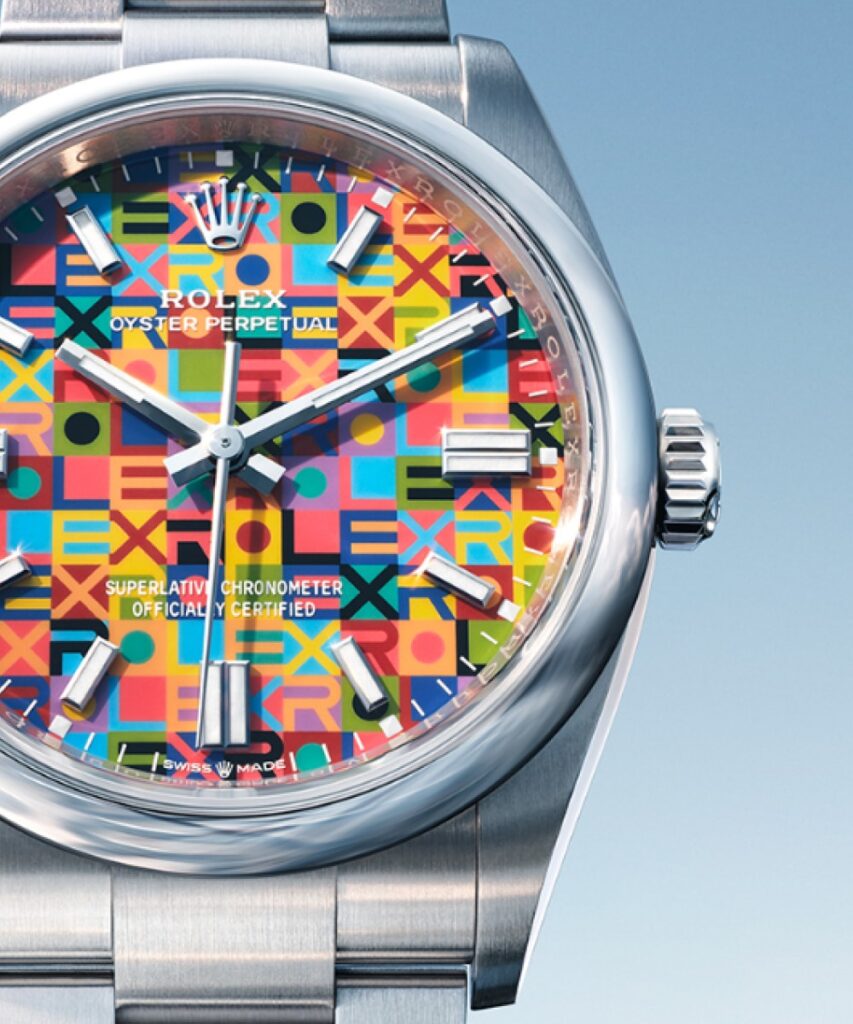
The lacquered dial is housed in a standard 36mm Oystersteel case and, disappointingly, without the 100th anniversary dial. It is powered by the same Calibre 3230 automatic movement with 70 hour power reserve.
Certain to be a hot waiting list watch, the Jubilee dial edition is priced at £5,600.
All Oysters are, of course, waterproof to at least the level of a standard £300 washing machine.
Credit
by Rob Corder April 14, 2026
Watchpro